

By Maya Wilkins | Post-Tribune
As he was jumping around in his family’s Hammond living room, three-year-old Eliazer Glover fell and hurt his elbow.
After shedding a few tears, his mother, Kal Glover, kissed his elbow where it hurt, and he was instantly cured.
“Calm down, okay?” Kal Glover tells him. “You were so happy a second ago.”
Although Eliazer’s mild elbow injuries can be cured by a kiss, his sickle cell disease diagnosis doesn’t disappear so easily. But, Kal Glover said she and her husband, Samuel Glover, are determined not to let the condition define who Eliazer is.
“I don’t want the stigma to be, ‘Oh, you have sickle cell, you can’t do this with the other kids,’” Kal Glover said. “Other adults will probably categorize him before they even have a chance to know what he’s capable of and what he can handle.”
Kal and Samuel Glover found out Eliazer had sickle cell disease at their first pediatrician appointment about a week after he was born. The Glovers both said they knew it was a possibility, but they thought he would have the sickle cell trait rather than disease.
According to the National Heart, Lung, and Blood Institute, sickle cell disease is a group of inherited disorders that affect hemoglobin in red blood cells. Typically, red blood cells are disc-shaped and can move easily through blood vessels, but with sickle cell disease, they’re a crescent — or sickle — shape and cannot bend or move easily and block blood flow.
Eliazer has the Hemoglobin SC form of sickle cell, which is considered a milder form of the disease. Kal Glover said the traits come from both her and Samuel Glover’s families, which they didn’t know before their first pediatrician appointment.
“We were so confused,” Kal Glover said. “We didn’t really know what was going on.”
Samuel Glover said one of his cousins has a daughter with sickle cell disease, so he’s known about it since she was born.
“We’ve experienced most of her treatments and hospital stays,” he said. “She always let us know when she had an episode or a pain crisis.”
Although he knew about sickle cell disease, Samuel Glover said he was still shocked when Eliazer’s results came back.
“It was complete disbelief,” he said. “At first I thought the test was wrong. I was mad, and I was just like, ‘How could you mess this up?’”
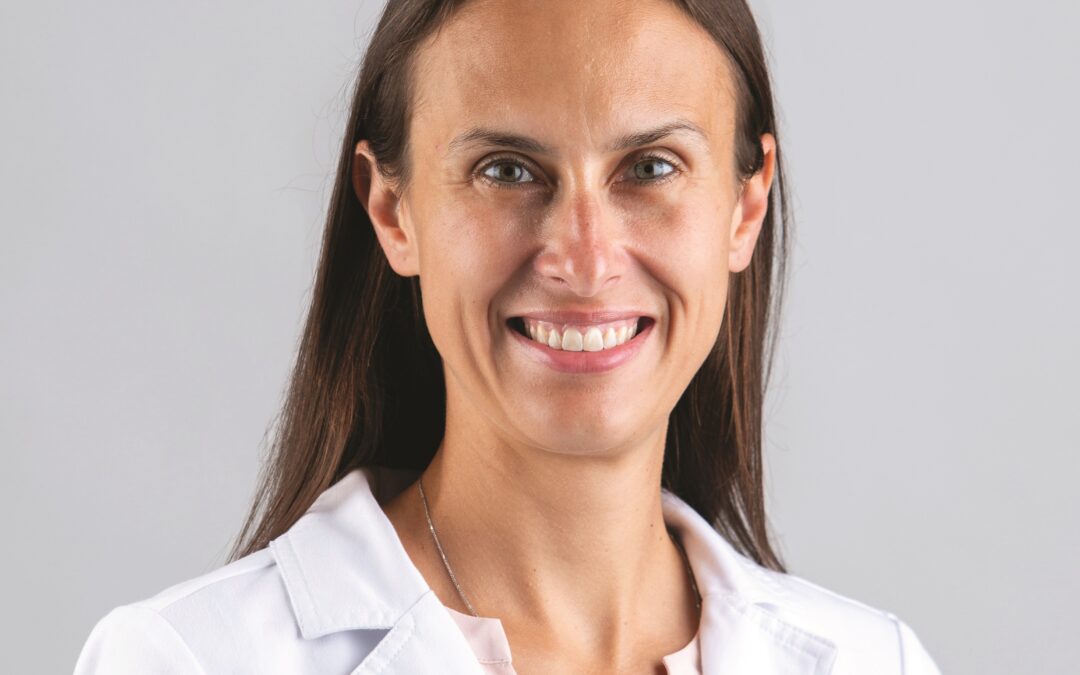
Dr. Laura Tyrrell, pediatric hematologist at the Indiana Hemophilia and Thrombosis Center, said sickle cell disease is more common in people who have ancestral links to parts of the world where malaria used to be or is still common. Those include Africa, parts of Latin America, South Asia, parts of the Middle East and Mediterranean areas.
Tyrrell said the sickle cell trait acts as a protection against malaria, which explains why those areas have higher instances of sickle cell trait and disease.
“Because of our multicultural makeup of the U.S. population, sickle cell trait and disease can be seen in all racial and ethnic groups here,” Tyrrell said. “But it is more commonly seen in African Americans. Somewhere around 8%, or one in about 13 African Americans has the sickle cell trait.”
Those who have sickle cell disease will face pain events when blood flow is blocked, Tyrrell said. According to the Centers for Disease Control and Prevention, that’s the top reason why sickle cell patients go to the emergency room.
Sickle cell patients must also seek medical attention if their body temperature is above 101 degrees, Tyrrell said, which can be the first sign of an infection. Patients can’t be in extreme heat or cold, Tyrrell said, because it can lead to complications.
Monitoring Eliazer’s body temperature is something the Glovers are always on top of. Eliazer runs hot in his sleep, Kal Glover said, so they prioritize keeping him cool during the nights.
“It’s not super difficult,” Kal Glover said. “The only other thing we have to watch out for is in the summer, if it’s extremely hot, there are days where he can’t go outside.”
To treat sickle cell disease, Eliazer has to get extra vaccines, and he takes five milliliters of liquid penicillin twice a day. Kal Glover said he’ll continue that until he’s five years old.
“The spleen isn’t fully capable,” she said. “So it helps to fight off that bacterial infection and the bacteria diseases and stuff like that.”
Since he’s still young, the Glovers said Eliazer doesn’t understand his condition. However, Kal Glover said they have no issues getting him to take his medicine, and some days, he has to remind his parents that it’s time to take it.
“He likes his medicine,” Kal Glover said. “It’s weird. I’ve never met a kid that likes medicine.”
In an email to the Post-Tribune, Tyrrell said 1,049 babies were born with the sickle cell trait in Indiana, and 31 babies were born with sickle cell disease. About 1,800 Indiana residents have sickle cell disease, with the highest numbers in Lake and Marion counties.
Although Lake County has a higher sickle cell population than other areas of the state, Kal and Samuel Glover said resources are still limited. When Eliazer was first diagnosed, they had to drive to Indianapolis for him to get tests and checkups done because they couldn’t find a clinic in Lake County.
“So, we were driving two hours away to get tests done,” Samuel Glover said.
Tyrrell said sickle cell research is behind most other disease research throughout the industry.
“People have been studying this disease for a long time,” Tyrrell said. “It was one of the first diseases they figured out was a genetic problem. But, I mean, the research is way behind all the other diseases for a whole lot of complicated reasons that have to do with research funding when funding allocations were more problematic.”
The Glovers said they believe sickle cell resources aren’t as available because it primarily affects Black Americans.
“I think people think that because it’s mostly just in our race, it’s not as important,” Kal Glover said, adding that it’s disappointing because Northwest Indiana has a high population of Black Americans. “I’m grateful that there’s people out there that are studying it, I wish there were more.”
Although the Glovers first had to get help in Indianapolis, they now go to a IHTC clinic in Gary for assistance, which they said is a “huge help” so they aren’t going on regular road trips with a three-year-old. The clinic offers various resources and events for families and connects them with others who have sickle cell disease.
Although sickle cell disease might take up a large part of the Glovers’ lives, the couple said they’re happy it doesn’t define who Eliazer is and that it hasn’t impacted his development.
“He’s special,” Kal Glover said. “He seems very healthy, and he’s a very happy kid.”
“You would think he was a normal child until we tell you that he has sickle cell disease,” Samuel Glover added.
Source: Post-Tribune